
Different Applications for Industrial Automation Products Across Modern Industries
Industrial automation has steadily shifted from a “nice-to-have” to a structural necessity across global industries. Today, industrial automation products sit at the core of how facilities maintain output, manage risk, and stay competitive. The real story, though, lies not in the components themselves, but in how automation control systems are applied across very different industrial environments.
From heavy manufacturing to water treatment plants, automation adapts to context. When applied correctly, industrial automation components create systems that run smoother, respond faster, and demand less firefighting from human operators.
1. Manufacturing
Manufacturing remains the most established and diverse application area for automation. Production floors rely on factory automation solutions to maintain consistency across high-volume operations, tight tolerances, and demanding schedules.
Automation in manufacturing supports:
- Automated assembly and machining lines
- Conveyor and material handling systems
- Packaging, labeling, and palletising operations
- Quality inspection and fault detection
Here, automation components for manufacturing help standardise output across shifts, reduce scrap, and limit downtime. Variable Frequency Drives, sensors, HMIs, and relays work together to keep machines synchronised and responsive under changing loads.
2. Energy Production
Energy production environments demand stability above all else. Automation systems play a central role in controlling turbines, generators, auxiliary equipment, and distribution processes.
In this sector, automation products for industrial applications are commonly used for:
- Motor speed and load control using AC and DC drives
- Monitoring pressure, temperature, and flow through sensors
- Centralised system supervision via HMIs
- Electrical protection using MCCBs and relays
Because energy facilities operate continuously, reliable automation equipment becomes essential. Even minor inefficiencies can escalate into costly outages, making robust automation control a non-negotiable requirement.
Read This: Choosing the Right Industrial Motors: A Guide to Types and Applications in Industry
3. Water Treatment
Water treatment plants rely on automation to maintain consistent quality while operating efficiently around the clock. Automation supports both treatment processes and distribution systems.
Key automation applications include:
- Pump and motor control for intake and distribution
- Flow and level monitoring through industrial sensors
- Process visualisation via HMIs
- Electrical protection and system safety
Here, automation control systems help facilities maintain compliance, reduce manual intervention, and respond quickly to fluctuations in demand or system conditions. Properly selected control panel components simplify maintenance and improve long-term system reliability.
4. Sugar Processing
Sugar processing involves a sequence of tightly controlled stages, from crushing and extraction to evaporation and crystallisation. Automation allows these processes to remain consistent despite variable raw material quality.
Typical automation applications in sugar plants include:
- Conveyor and milling motor control
- Temperature and pressure regulation
- Process sequencing and interlocks
- Centralised monitoring of production stages
In these environments, industrial automation solutions provider expertise plays a major role. Well-integrated systems help reduce energy consumption, improve yield, and stabilize production cycles without adding unnecessary complexity.
Read More: Common Types of Valves Used in Sugar Mill Machinery
5. Chemical Processing
Chemical processing environments demand precision, repeatability, and safety. Automation is applied to control reactions, manage hazardous materials, and protect equipment and personnel.
Automation supports chemical processing through:
- Accurate control of flow rates and mixing processes
- Continuous monitoring of pressure and temperature
- Safety interlocks and emergency shutdown systems
- Centralised process control using HMIs
Because of the risks involved, chemical facilities depend heavily on industrial automation components that deliver predictable performance under demanding conditions. Selecting automation products for industrial applications with proven reliability is critical in this sector.
6. Mining
Mining operations present some of the harshest environments for automation equipment. Dust, vibration, moisture, and extreme loads make reliability a defining factor.
Automation applications in mining include:
- Conveyor belt control and monitoring
- Motor control for crushers, mills, and pumps
- Electrical protection systems
- Remote monitoring and diagnostics
Mining operations benefit significantly from factory automation solutions that improve safety and reduce manual intervention in hazardous areas. Here, automation is less about speed and more about operational control and risk reduction.
Automation Applications by Industry
The table below highlights how automation supports each of these industries:
| Industry | Automation Applications | Primary Benefit |
| Manufacturing | Assembly, packaging, inspection | Consistency and throughput |
| Energy Production | Motor control, monitoring | Stability and efficiency |
| Water Treatment | Pumps, flow control | Compliance and reliability |
| Sugar Processing | Process sequencing | Yield and energy control |
| Chemical Processing | Reaction control | Precision and safety |
| Mining | Material handling, monitoring | Safety and uptime |
Global Perspective on Automation Applications
The application of industrial automation products now spans facilities across Oman, the UAE, Kenya, Australia, Nigeria, and far beyond. Alliance Industrial Products supports automation deployments across North America, South America, Africa, Asia, and Europe, supplying solutions that adapt to regional standards and operational demands.
- Industrial Electric Motors for Cable Manufacturing in South Africa: Boost Efficiency & Reliability
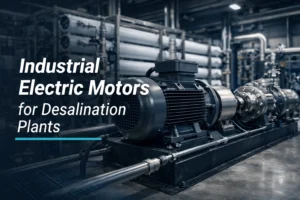
- How Industrial Electric Motors Power Desalination Plants in Qatar
- Valve Selection Simplified: The Criteria to Follow

This global reach reflects the versatility of modern automation control systems, which can be scaled and configured for vastly different industries without compromising reliability.
Why Application-Driven Automation Matters
Automation delivers its greatest value when systems are designed around real-world use cases rather than individual components. Matching industrial automation components to their specific applications reduces integration challenges and improves long-term performance.
When implemented with purpose, automation simplifies operations, strengthens safety, and provides clearer visibility into industrial processes. As industries continue to evolve, application-focused automation will remain the foundation for smarter, more resilient operations.

