
Agriculture depends on one thing that cannot be negotiated: a reliable supply of water.
For farms drawing water from deep wells, rivers or reservoirs, choosing the right pumping system can make a major difference. A vertical turbine pump for agriculture is designed specifically for these conditions, lifting water from submerged pumping stages to a surface irrigation system.
But what makes this pump different from other agricultural water pumps?
And when does a vertical turbine design make the most sense?
This post will take a closer look.
What Is a Vertical Turbine Pump?
A vertical turbine pump is a type of centrifugal pump designed to move water from a submerged source to the surface.
The basic arrangement is quite different from a typical submersible pump.
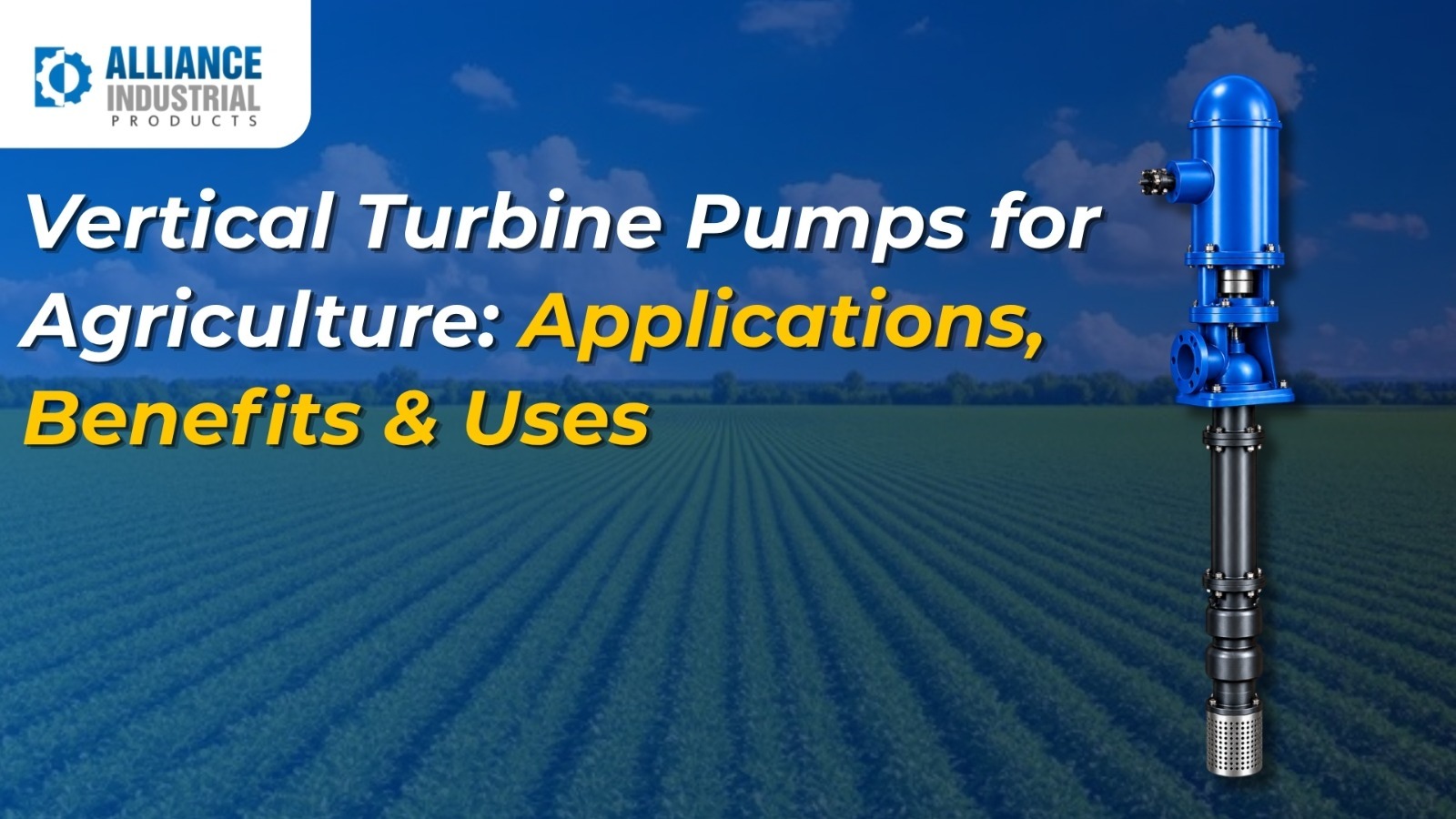
With a vertical turbine pump, the motor stays above ground, while the pumping bowls and impellers sit below the water level. A long vertical shaft connects the motor to the impellers.
That arrangement offers an important advantage: the motor remains accessible at the surface.
For agricultural installations, this can make inspection, servicing and motor maintenance considerably more convenient.
How Does a Vertical Turbine Pump Work?
The operating principle is fairly straightforward, although the pump itself can have several stages.
1. Suction Bell
Water enters the pump through the bell-shaped suction inlet at the bottom. Its shape helps guide water smoothly toward the first impeller.
2. Impellers
The rotating impellers transfer energy to the water, increasing its velocity and moving it upward.
3. Diffuser Bowls
The water then passes through stationary diffuser bowls. These convert part of the water’s velocity into pressure.
4. Multi-Stage Pumping
Need to lift water higher?
Additional impeller and bowl stages can be added. Each stage contributes more pressure, allowing the pump to handle greater heads.
This is particularly useful when water needs to travel from a deep source to an irrigation network at the surface.
5. Discharge Head
The water travels upward through the vertical column and reaches the discharge head, where it enters the surface piping system.
So, while the pump operates below the water level, the motor and discharge connection remain accessible above ground.
Where Are Vertical Turbine Pumps Used in Agriculture?
This is where the design becomes especially useful.
Vertical turbine pump applications can include agricultural water sources such as:
- Deep wells
- Rivers
- Reservoirs
- Irrigation canals
- Large water storage systems
- Agricultural pumping stations
They are particularly useful when large volumes of water need to be lifted from a source located below the pump installation.
For large farms, this can make them an important part of the overall irrigation infrastructure.
Vertical Turbine Pumps for Irrigation Systems
Modern irrigation can involve large areas, long pipe runs and significant water requirements.
That means the pumping system needs to deliver the required flow and pressure without being selected on flow rate alone.
A vertical turbine pump for irrigation systems can be configured with multiple stages to meet the required head. The pump can therefore be matched to the elevation difference, pipeline losses and pressure requirements of the irrigation network.
Depending on the setup, the pumped water may then supply:
- Sprinkler systems
- Field irrigation networks
- Drip irrigation systems
- Storage tanks
- Agricultural distribution pipelines
The key is to size the pump around the actual system requirements rather than simply choosing the largest available model.
Why Use a Vertical Turbine Irrigation Pump?
There are several reasons these pumps remain useful for agricultural water systems.
1. The Motor Stays Above Ground
This is one of the biggest practical advantages.
Because the motor sits above the water source, technicians can access it without removing a submerged motor.
That can simplify inspection and maintenance.
2. Suitable for Deep Water Sources
Vertical turbine pumps can be configured for deep-water applications using multiple pumping stages.
This makes them suitable for certain deep wells and other submerged water sources where conventional surface pumping arrangements may not be practical.
3. High Flow Capacity
Agricultural irrigation often requires significant volumes of water.
These pumps can be configured for high-flow applications, making them suitable for large irrigation systems and agricultural water distribution.
4. Flexible Drive Options
The surface motor can be powered using an electric motor. In locations where grid electricity is limited, certain configurations can also use an engine-driven setup.
That can be useful for agricultural installations in remote areas.
5. Configurable Pumping Stages
The number of stages can be selected according to the required head.
As a result, the pump can be configured around the application’s water-lifting requirements rather than using a one-size-fits-all arrangement.
Vertical Turbine Pump vs Submersible Pump
Both designs can be used for water pumping, but their configurations are different.
A submersible pump places the motor and pump assembly underwater. A vertical turbine arrangement keeps the motor above the surface while the pumping stages remain submerged.
That difference can influence maintenance access, installation requirements and the suitability of each design for a particular water source.
So, which one is better?
There is no universal answer.
The right choice depends on well depth, flow requirements, water conditions, available power, installation layout and maintenance considerations.
Getting the Pump Selection Right
A pump that looks suitable on paper may still perform poorly if its operating point does not match the irrigation system.
That is why pump selection should consider the complete system, including the water source, required flow, total head, piping and power supply.
At Alliance Industrial Products, we help customers select industrial and agricultural pumping solutions based on their application requirements. We offer ready-stock options for available products, competitive pricing aligned with the global industrial market, fast response and 24×7 service.
We can also help identify the appropriate configuration based on your pumping requirements.
Need a vertical turbine pump for an agricultural application? Talk to Alliance Industrial Products about your water source, flow and head requirements.
Resources
For additional information on agricultural water management, irrigation and pumping systems, readers can explore resources from:
- U.S. Department of Agriculture (USDA): Agricultural water and irrigation resources.
- U.S. Bureau of Reclamation: Technical resources on irrigation and water management.
- FAO: Agricultural water management and irrigation resources.
Frequently Asked Questions
1. What is a vertical turbine pump used for?
It is commonly used to lift water from deep wells, rivers, reservoirs and other submerged sources for applications such as agricultural irrigation and water supply.
2. Why is the motor above ground in a vertical turbine pump?
Keeping the motor above ground makes it easier to access for inspection, maintenance and repairs while the pumping stages remain submerged.
3. Are vertical turbine pumps suitable for deep wells?
Yes. Their multi-stage design allows them to generate the head needed for many deep-water pumping applications.
4. How do you select a vertical turbine pump for irrigation?
Consider the required flow rate, total dynamic head, water level, water quality, power supply and operating conditions before selecting the pump.
5. Are vertical turbine pumps better than submersible pumps?
Neither is universally better. The appropriate choice depends on the water source, pumping requirements, installation conditions, power availability and maintenance needs.

