
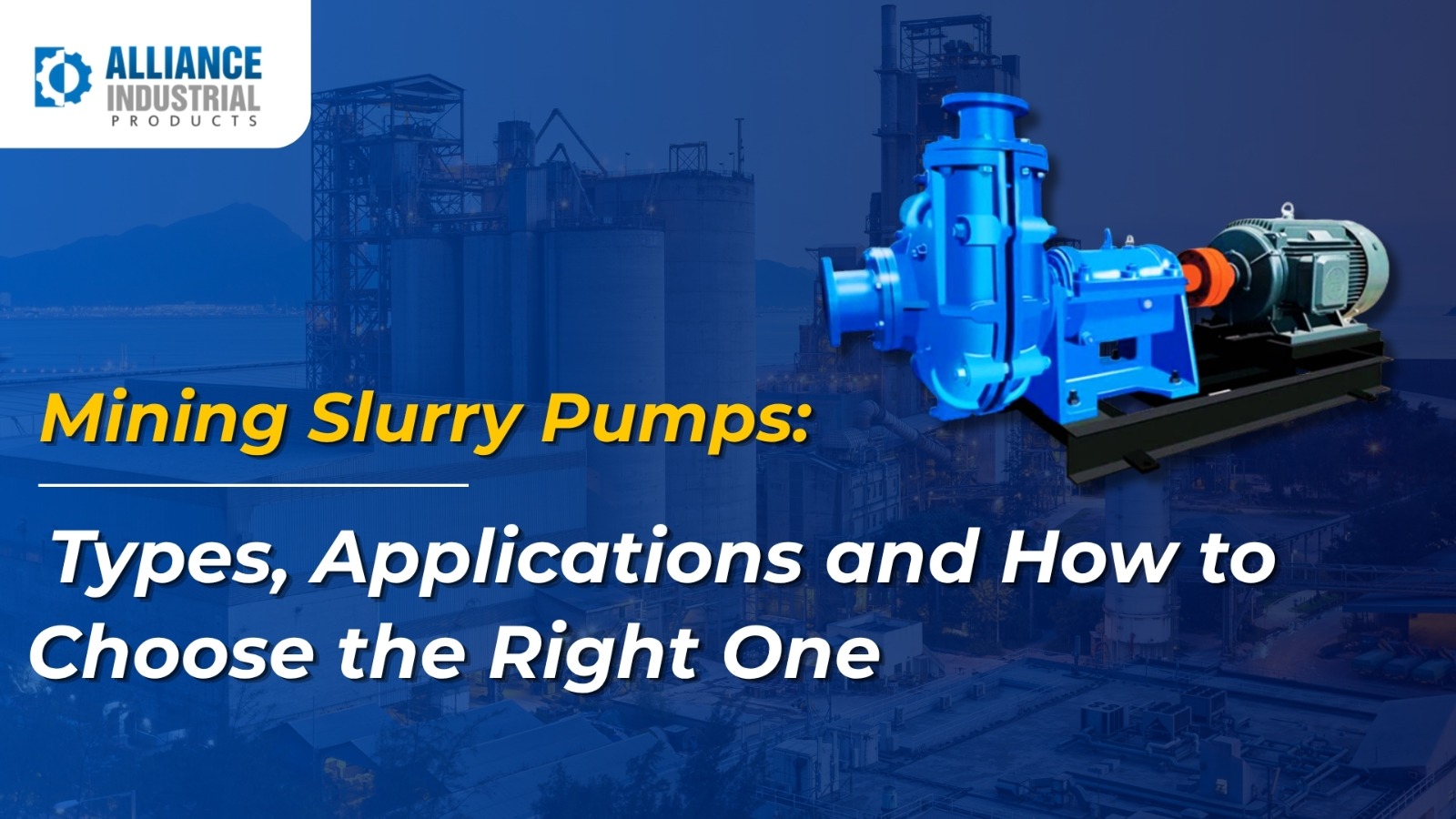
Mining is full of tough materials. Rock, ore, minerals, tailings and water often move through the same process, and that creates a demanding pumping job.
That is why mining slurry pumps are built differently from pumps designed for clean water. They need to move liquid that contains solid particles, often under abrasive and demanding operating conditions. In mineral processing, slurry transport can form a major part of moving material through the plant.
So, what makes a slurry pump suitable for mining? And how do you choose the right one when the slurry itself can vary so much?
Let’s break it down.
What Is a Mining Slurry Pump?
A mining slurry pump is designed to move a mixture of liquid and solid particles through mining and mineral processing operations.
Unlike clear-water pumps, slurry pumps need to deal with solids that can cause significant wear. The type and concentration of solids, their size, the required flow and pressure, and the chemistry of the slurry can all affect pump selection.
That is why slurry pumps for mining typically use heavy-duty construction and wear-resistant components suited to the application. Centrifugal slurry pumps, for example, use a rotating impeller to add energy to the slurry and move it through the system.
Why does the slurry itself matter?
Consider the difference between:
- A relatively low-solids slurry
- A dense mineral slurry
- A highly abrasive slurry
- A chemically aggressive slurry
- Thick tailings travelling over a long distance
They may all be called “slurry”, but they do not place the same demands on a pump.
The pump has to match the material and the process.
Where Are Mining Slurry Pumps Used?
The applications extend across several stages of mining and mineral processing.
1.) Ore Processing
Crushing and grinding create material that often needs to be transported as slurry.
Pumps can move this slurry between different stages of the process, including grinding circuits and classification equipment. Mill discharge and hydrocyclone feed are common slurry pumping applications.
2.) Beneficiation and Mineral Processing
During beneficiation, slurry can move through processes such as grinding, classification and flotation.
Here, pump selection can affect how reliably material moves between stages. For example, slurry pumps are used for flotation and hydrocyclone feed applications in mineral processing plants.
3.) Tailings Transport
Tailings can contain substantial amounts of fine solids and may need to travel significant distances.
The pumping requirements therefore depend on factors such as slurry characteristics, pipeline layout, distance and required pressure.
For demanding tailings duties, both centrifugal and positive displacement slurry pumping technologies can be used, depending on the application.
4.) Water Recovery
Mining operations may also need to move water containing solids as part of water management and recovery processes.
The key consideration is that this is not necessarily the same as clean-water pumping. Solids content and corrosion risk still need to be considered.
5.) Underground Mine Backfill
Slurry pumping can also support hydraulic backfill systems, where suitable material is transported underground for mine backfilling.
The required pump depends on the slurry characteristics and the pressure and flow requirements of the system.
Types of Mining Slurry Pumps
There is no single pump design for every mining application.
Instead, different pump configurations suit different duties.
Horizontal Slurry Pumps
Horizontal centrifugal pumps are widely used for mineral processing and slurry transfer.
They can be configured for applications such as:
- Mill discharge
- Hydrocyclone feed
- Tailings
- Slurry transfer
- Mineral processing
- Highly abrasive duties
Depending on the slurry, pump designs may use hard-metal or rubber-lined wet-end components.
Vertical Slurry Pumps
Vertical pumps can be useful for applications such as sumps and other duties where the pump arrangement needs to suit the installation.
For example, mining slurry pump guides include vertical pump configurations for floor sump applications.
Positive Displacement Slurry Pumps
Centrifugal pumps are not the only option.
Positive displacement pumps can also be used for demanding applications involving abrasive slurry, tailings and long-distance transport. Their suitability depends on the pressure, flow, slurry properties and overall system design.
What Makes Industrial Slurry Pumps Different?
The biggest challenge is wear.
Solid particles moving through a pump can wear components over time. That makes the material and construction of industrial slurry pumps important.
Depending on the application, manufacturers may use:
- Hard metal wear components
- Rubber-lined components
- Corrosion-resistant materials
- Different impeller designs
- Different shaft sealing arrangements
The right choice depends on the slurry and operating conditions. For instance, hard metal and rubber-lined designs can suit different slurry characteristics and particle sizes.
This is also why pump selection should not stop at flow rate and motor power.
How to Choose a Slurry Pump for Mining
A pump that looks suitable on paper may still be the wrong choice for the actual process.
Before selecting a slurry pump for mining industry applications, consider:
| FACTOR | WHY IT MATTERS |
| Flow rate | Determines how much slurry needs to move |
| Head / pressure | Determines the energy required to move slurry through the system |
| Solids concentration | Changes the pumping and wear requirements |
| Particle size | Affects hydraulic and wear considerations |
| Abrasiveness | Helps determine suitable wear materials |
| Corrosiveness | Can affect material selection |
| Temperature | May influence pump and component selection |
| Pipeline length | Can affect pressure requirements |
| Pump location | Helps determine horizontal or vertical configuration |
| Duty cycle | Influences equipment selection and maintenance planning |
So, rather than asking “Which slurry pump is best?”, ask a more useful question:
“Which pump is best for this slurry, this duty and this system?”
That shift can make pump selection much more practical.
Mining Slurry Pump Solutions Should Match the Process
A good mining slurry pump solutions strategy looks beyond the pump itself.
For example, the system may include:
Pump → Motor → Drive → Piping → Valves → Sealing → Wear Components
Each part affects how the pumping system performs.
Likewise, maintenance matters. Wear components may eventually need inspection or replacement, particularly in highly abrasive applications. Some modern slurry pump designs focus on easier maintenance and replaceable wear components to help reduce downtime.
At Alliance Industrial Products, we help industrial customers source pump solutions based on the application rather than simply matching a product to a basic specification.
If you are evaluating a slurry pumping requirement, speak with us about the flow, head, slurry characteristics and operating conditions.
Getting More Out of Your Mining Pump Selection
Mining slurry pumping is a demanding job, but the selection process does not need to be guesswork.
Start with the slurry.
Then look at the flow, pressure, solids, particle size, abrasiveness, corrosion risk and system layout. From there, the right pump type and materials become much easier to determine.
Ultimately, mining slurry pumps need to be selected around the real conditions they will face. A pump suited to one mineral processing duty may not be suitable for another.
At Alliance Industrial Products, we work with industrial customers to identify suitable pumping solutions for demanding applications, including mining and slurry handling requirements.
Have a mining slurry application to discuss? Get in touch with Alliance Industrial Products and let’s look at the pumping requirements together.
Frequently Asked Questions
1. What are mining slurry pumps used for?
Mining slurry pumps move mixtures of liquid and solid particles through applications such as grinding circuits, hydrocyclone feed, flotation, tailings transport, slurry transfer and mine backfill.
2. Why can’t standard water pumps always be used for mining slurry?
Mining slurry can contain abrasive and dense solid particles that create much higher wear demands than clean water. Slurry pumps use designs and materials suited to these conditions.
3. What factors affect slurry pump selection?
Flow rate, required head, solids concentration, particle size, abrasiveness, corrosion, temperature, pipeline length and the installation arrangement can all affect selection.
4. What are the main types of slurry pumps?
Common configurations include horizontal centrifugal pumps, vertical pumps and positive displacement pumps. The appropriate type depends on the application and operating conditions.
5. Are slurry pumps used for tailings?
Yes. Slurry pumps are used in tailings applications, although the appropriate pump depends on the characteristics of the tailings and the required transport conditions.
6. How can I choose the right slurry pump for a mining application?
Start by defining the slurry and the duty. Gather information about flow, head, solids concentration, particle size, abrasiveness, corrosion and system layout. Then select the pump configuration and materials around those requirements.

