
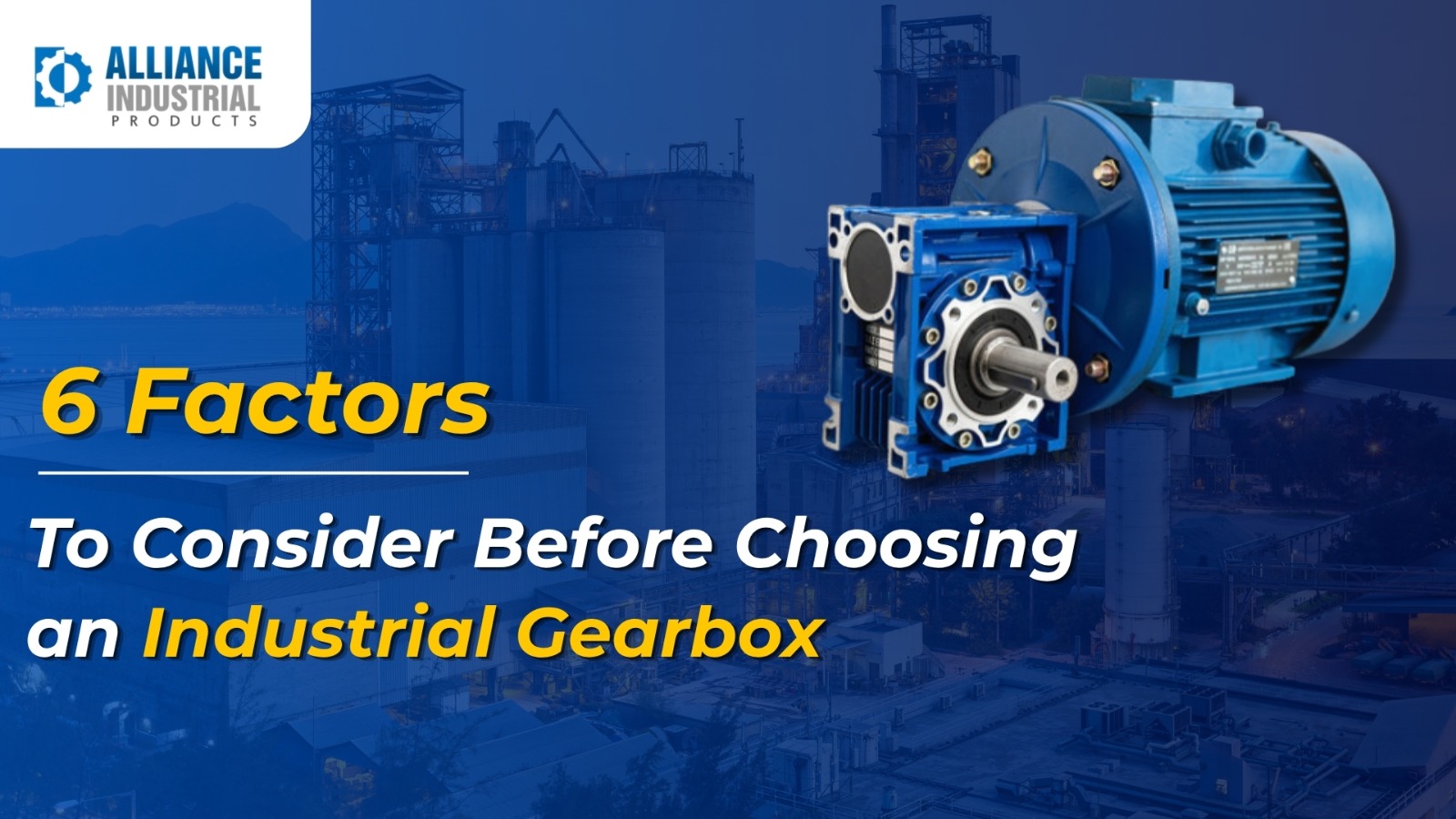
An industrial gearbox is more than just a power transmission component. It determines how efficiently torque is delivered, how smoothly equipment operates, and how reliably an entire production line performs.
Selecting the wrong gearbox can lead to higher energy consumption, frequent breakdowns, excessive wear, and costly downtime. In many cases, these problems aren’t caused by poor manufacturing – they result from choosing a gearbox that doesn’t match the application’s requirements.
Before investing in a industrial gearbox, it’s important to evaluate several technical parameters that directly affect performance and service life.
1 Evaluate the Required Gearbox Torque
Torque is one of the most important considerations when selecting an industrial gearbox.
Every application demands a specific amount of rotational force. If the gearbox cannot deliver the required torque, gears and bearings may wear prematurely or fail completely. On the other hand, selecting a gearbox with a much higher torque rating than necessary can increase equipment costs without delivering additional value.
The right gearbox torque should always match the application’s operating requirements while allowing an appropriate safety margin for changing load conditions.
Applications with high torque requirements include:
● Heavy-duty conveyors
● Crushers
● Mixers
● Agitators
● Material handling systems
● Mining equipment
Selecting the correct torque rating helps improve reliability while reducing unnecessary maintenance.
2 Match the Gear Ratio with the Required Output Speed (RPM)
Industrial motors typically operate at high speeds, but many machines require much lower operating speeds to perform efficiently.
This is where the gear ratio plays a critical role.
The gearbox reduces the motor’s input speed while increasing the available output torque. Selecting the wrong ratio may cause equipment to run too fast or too slowly, affecting productivity and product quality.
When choosing a gearbox reduction ratio, consider:
● Motor input speed
● Required output RPM
● Desired production capacity
● Load characteristics
Matching these parameters allows equipment to operate efficiently while reducing unnecessary stress on mechanical components.
3 Never Ignore the Service Factor
Many gearbox failures occur because the service factor wasn’t properly evaluated during equipment selection.
The service factor accounts for operating conditions that place additional stress on the gearbox beyond its standard rated capacity.
These include:
● Frequent starts and stops
● Shock loading
● Continuous operation
● Heavy-duty applications
● Variable loading conditions
For example, a gearbox driving a packaging conveyor experiences different operating conditions than one used in a mining crusher or cement plant.
Selecting an appropriate gearbox service factor helps prevent premature wear while extending the life of gears, bearings, and seals.
4 Select the Right Gearbox Mounting Position
The mounting arrangement affects far more than installation.
Choosing the correct gearbox mounting position supports proper lubrication, simplifies maintenance, and helps maintain reliable operation throughout the gearbox’s service life.
Common mounting options include:
● Foot-mounted gearboxes
● Flange-mounted gearboxes
● Shaft-mounted gearboxes
● Horizontal mounting
● Vertical mounting
Every installation has different space constraints and operational requirements. Selecting the appropriate mounting configuration helps improve performance while reducing installation challenges.
5 Consider the Application Before Choosing the Gearbox Type
Not every industrial gearbox is designed for the same application.
Different industries demand different operating characteristics.
For example:
● Conveyor systems often require continuous, energy-efficient operation.
● Mixers generally need high torque at lower speeds.
● Packaging machinery depends on accurate speed control.
● Crushers demand exceptional durability under heavy loads.
● Cooling towers require reliable long-term performance.
Choosing the right gearbox type is equally important.
Depending on the application, suitable options may include:
● Helical Gearbox
● Bevel Helical Gearbox
● Worm Gearbox
● Planetary Gearbox
● Inline Gearbox
● Coaxial Gearbox
Each design offers distinct advantages based on speed, torque, efficiency, and installation requirements.
6 Assess the Operating Environment
The surrounding environment plays a significant role in gearbox performance and longevity.
Factors such as dust, moisture, high temperatures, corrosive chemicals, and washdown conditions should all be considered before selecting a industrial gearbox.
For hygienic industries such as food processing, beverage manufacturing, pharmaceuticals, and dairy plants, stainless steel gearboxes may be the preferred choice because they offer excellent corrosion resistance and support easier cleaning.
Meanwhile, industries such as mining, cement, steel, and material handling may prioritise durability, sealing performance, and heavy-duty construction over housing material.
Selecting a gearbox that matches its operating environment helps maximise equipment reliability and service life.
What Happens When the Wrong Gearbox Is Selected?
Incorrect gearbox selection can create problems that extend well beyond the gearbox itself.
Common issues include:
● Premature gear wear
● Bearing failure
● Excessive vibration
● Oil leakage
● Motor overloading
● Higher energy consumption
● Unexpected production downtime
● Reduced equipment life
● Increased maintenance costs
Many of these problems can be avoided simply by evaluating the correct technical parameters before installation.
Work with an Experienced Industrial Gearbox Supplier
Selecting an industrial gearbox involves much more than comparing catalogue specifications.
An experienced industrial gearbox supplier evaluates the complete application, including torque requirements, speed, service factor, mounting arrangement, duty cycle, operating environment, and available installation space before recommending a suitable solution.
At Alliance Industrial Products, we supply a comprehensive range of industrial gearboxes, including helical gearboxes, bevel helical gearboxes, worm gearboxes, planetary gearboxes, inline gearboxes, coaxial gearboxes and more from globally recognised manufacturers.
Backed by technical expertise and international procurement capabilities, we help industries identify gearbox solutions that deliver reliable performance, longer service life, and improved operational efficiency.

