
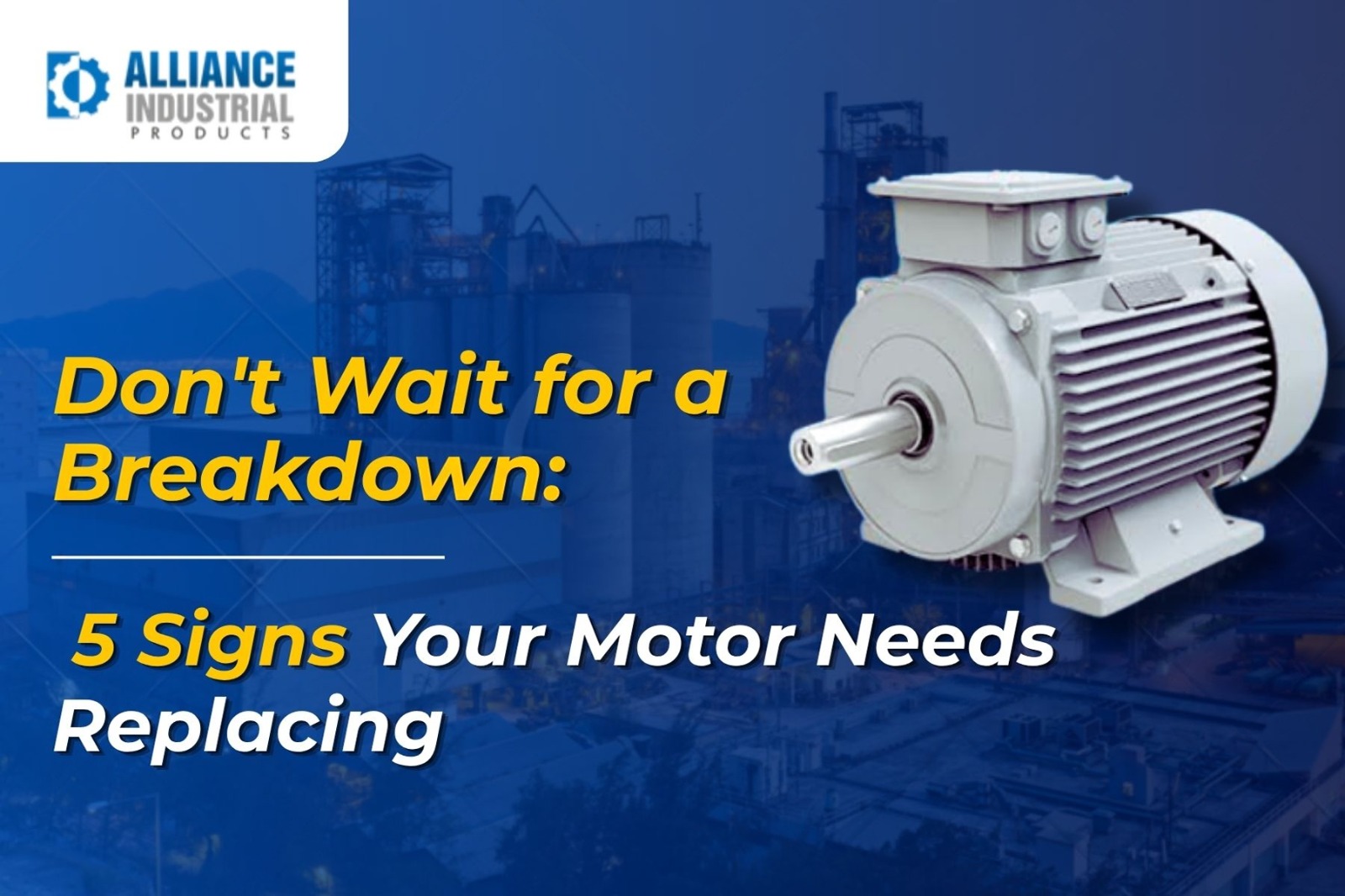
An industrial electric motor is one of the hardest-working components in any industrial facility. Be it powers pumps, conveyors, compressors, fans, or processing equipment, its performance directly affects productivity. However, like any mechanical and electrical asset, every motor has a service life.
The challenge is knowing when repairs are enough and when replacement becomes the smarter investment. Waiting too long can lead to unexpected downtime, higher maintenance costs, and reduced efficiency. On the other hand, replacing a motor too early can result in unnecessary spending.
So, when should you replace an industrial electric motor? The answer depends on its condition, operating history, and overall performance. Here are five clear signs that indicate it may be time to consider an upgrade.
1.) An Industrial Electric Motor Breaks Down Frequently
Every motor will require maintenance at some point. However, repeated failures often signal a deeper problem.
If your maintenance team spends more time repairing the same motor than keeping it running, the costs can quickly add up. Bearings, windings, insulation, and other internal components naturally wear over time. As these failures become more frequent, reliability declines.
At this stage, industrial electric motor replacement often delivers better long-term value than continuing with repeated repairs.
Instead of dealing with recurring downtime, a new motor can restore dependable performance and reduce maintenance requirements.
2.) An Industrial Electric Motor Shows Persistent Overheating
Industrial motors generate heat during normal operation. However, excessive or recurring overheating should never be ignored.
Several factors may contribute to overheating, including:
- Poor ventilation
- Overloading
- Voltage imbalance
- Damaged insulation
- Bearing problems
- High ambient temperatures
Although some of these issues can be corrected, continuous overheating accelerates insulation ageing. According to the International Electrotechnical Commission (IEC), insulation systems play a major role in determining motor lifespan. Once insulation begins to deteriorate significantly, the risk of failure increases considerably.
If overheating continues despite corrective maintenance, it may be time to replace industrial motor equipment before a complete breakdown occurs.
3.) Your Industrial Electric Motor Is Consuming More Energy
Energy efficiency has become an increasingly important consideration across modern industries.
As motors age, internal wear, declining insulation quality, and reduced mechanical efficiency can increase power consumption. While these changes may happen gradually, the additional electricity costs accumulate over years of operation.
Monitoring power usage alongside production output often reveals declining motor efficiency.
Modern high-performance motors that comply with internationally recognised efficiency standards can help reduce operating costs while improving reliability. Therefore, electric motor replacement may provide financial benefits beyond avoiding future failures.
For facilities operating continuously, even modest efficiency improvements can produce meaningful long-term savings.
4.) Excessive Vibration and Noise Are Becoming Normal for Your Industrial Electric Motor
Vibration and unusual noise rarely improve on their own.
Instead, they usually indicate developing mechanical or electrical problems such as:
- Bearing wear
- Shaft misalignment
- Rotor imbalance
- Loose components
- Mechanical damage
Ignoring these warning signs may place additional stress on connected equipment, including gearboxes, couplings, and driven machinery.
This is also one of the common signs of industrial electric motor failure maintenance teams monitor during routine inspections.
Condition monitoring techniques such as vibration analysis can help identify developing problems early. However, if inspections repeatedly reveal increasing vibration despite corrective action, replacement often becomes the more reliable solution.
5.) Repairs Cost More Than the Motor Is Worth
Maintenance always plays an important role in extending equipment life. Nevertheless, there comes a point where repairs no longer make financial sense.
If major components such as stator windings, rotors, or shafts require repeated attention, repair costs can escalate quickly. Production losses caused by downtime should also be considered alongside maintenance expenses.
This raises an important question: repair or replace an industrial electric motor?
A practical approach is to evaluate:
- Repair costs
- Motor age
- Energy efficiency
- Reliability history
- Spare parts availability
- Downtime risks
If repairs continue to increase while reliability declines, replacement often provides a stronger long-term return on investment.
How to Know if an Industrial Electric Motor Needs Replacing
Many motor failures do not happen suddenly. Instead, they develop gradually through warning signs that become easier to detect with regular inspections.
Some of the most common indicators include:
- Frequent breakdowns
- Persistent overheating
- Increasing energy consumption
- Excessive vibration
- Unusual operating noise
- Reduced performance under normal loads
- Declining reliability despite maintenance
Understanding how to know if an industrial electric motor needs replacing allows maintenance teams to plan upgrades before unexpected failures interrupt production.
In addition, predictive maintenance programmes that include vibration analysis, insulation resistance testing, temperature monitoring, and electrical testing help identify problems at an earlier stage.
Why Planned Replacement Is Better Than Emergency Replacement
Emergency failures rarely happen at a convenient time.
Unexpected shutdowns can delay production, increase labour costs, and affect delivery schedules. In contrast, planned replacement allows maintenance teams to schedule installation during planned shutdown periods.
This approach offers several advantages:
- Reduced operational disruption
- Better procurement planning
- Improved installation scheduling
- Lower emergency maintenance costs
- Greater equipment reliability
Choosing the Right Replacement Motor
Selecting the right replacement motor is just as important as deciding when to replace it.
Factors worth considering include:
- Power rating
- Operating environment
- Starting torque requirements
- Duty cycle
- Efficiency class
- Compliance with IEC, NEMA, or ATEX standards where applicable
- Compatibility with existing equipment
Working with an experienced supplier also helps simplify motor selection, particularly for demanding industrial applications.
Alliance Industrial Products supplies high-performance three-phase electric motors for industries including manufacturing, water treatment, mining, oil and gas, steel production, and sugar processing. Its portfolio includes general purpose, severe duty, explosion-proof, and high-voltage motors from globally recognised manufacturers such as ABB, Siemens, and Crompton.
Conclusion
Every industrial electric motor eventually reaches the point where replacement becomes the better business decision. Frequent breakdowns, overheating, rising energy consumption, excessive vibration, and increasing repair costs all indicate that the motor may no longer deliver dependable performance.
Recognising the signs it’s time to replace your industrial electric motor allows businesses to plan maintenance proactively instead of reacting to unexpected failures. A planned replacement not only improves reliability but also helps reduce downtime, control operating costs, and support long-term productivity.
If your facility is evaluating replacement options, choosing a high-quality motor from a trusted industrial supplier can help keep your operations running efficiently for years down the line.

