
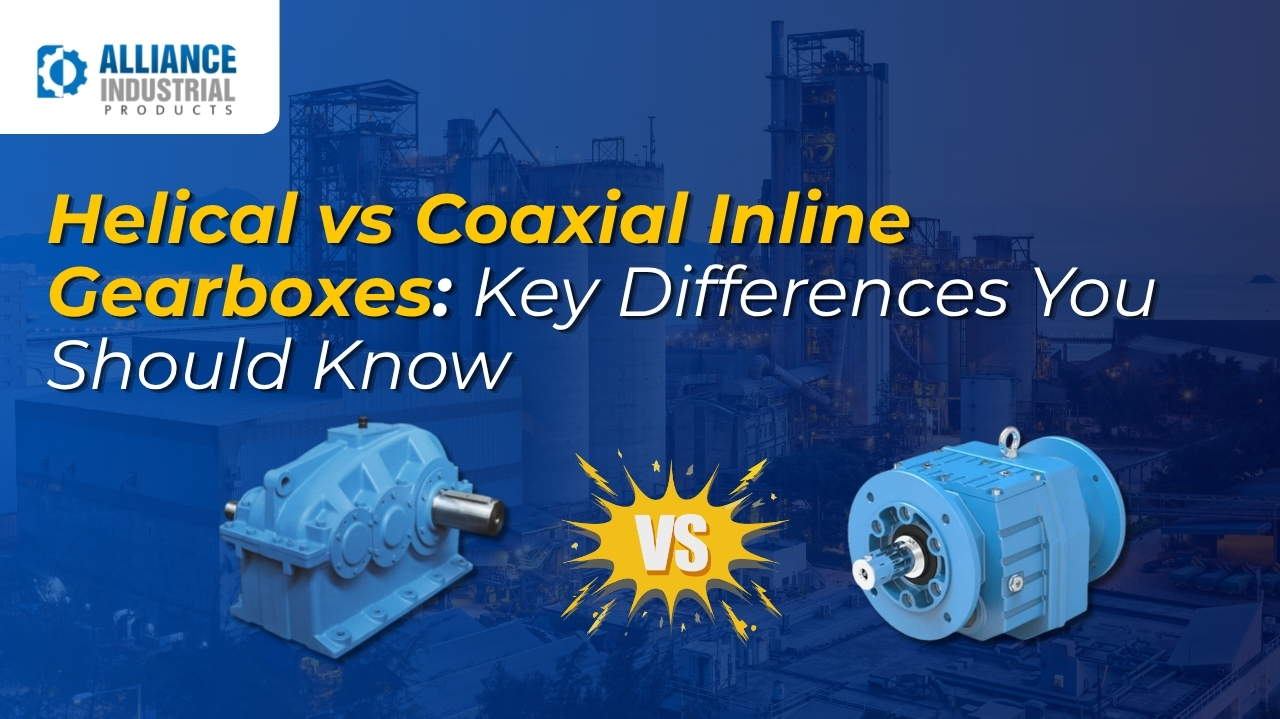
Selecting the right gearbox is about much more than matching torque or speed. The gearbox layout also plays a major role in machine performance, installation, maintenance, and long-term reliability.
That is why the debate around Helical Gearboxes vs Coaxial Helical Inline Gearboxes continues across industries. At first glance, they appear very similar. After all, both use helical gears that offer high efficiency, smooth power transmission, and excellent load handling. However, once you look at the design, the differences become much clearer.
So, which one is the better choice for your application? Let’s break down some key differences that can help you make a more informed decision.
1.) Shaft Alignment Changes the Entire Drive Layout
The biggest difference lies in how the input and output shafts are arranged.
A Coaxial Helical Inline Gearbox places both shafts on the same centerline. This creates a straight, compact drive system where the motor and driven equipment remain perfectly aligned.
A Standard Helical Gearbox, on the other hand, can be configured in several layouts, including parallel shaft, offset, or right-angle designs. This flexibility makes it suitable for machinery with more complex installation requirements.
In short:
- Coaxial Helical Inline Gearboxes are ideal for straight-line power transmission.
- Standard Helical Gearboxes provide greater flexibility when equipment layout is not inline.
2.) Installation Space Can Make the Decision for You
Factory space is valuable. Consequently, equipment designers often choose a gearbox based on available installation space.
A Coaxial Helical Inline Gearbox has a slim, linear profile because the motor and output shaft remain in one line. This compact arrangement works particularly well in automated systems where every inch matters.
Meanwhile, a Standard Helical Gearbox may require additional installation space depending on its shaft arrangement. While this creates a larger footprint, it also allows the gearbox to fit applications where an inline design simply is not practical.
If your equipment has tight space constraints, an inline gearbox often becomes the preferred option.
3.) Design Flexibility Differs Significantly
This is where many buyers become confused.
The term Helical Gearbox refers to a broad family of gear units rather than one single design. That family includes parallel shaft gearboxes, right-angle gearboxes, and inline configurations.
A Coaxial Helical Inline Gearbox focuses on one specific design where the input and output shafts stay on the same axis.
As a result, standard helical gearboxes provide more installation flexibility across different industrial applications, while coaxial inline units prioritize simplicity and compactness.
The right choice depends on the equipment, not on which gearbox appears more advanced.
Different Applications Call for Different Gearboxes
Neither gearbox is universally better.
Instead, each one excels in specific operating conditions.
A Coaxial Helical Inline Gearbox is commonly used in:
- Conveyor systems
- Industrial automation
- Robotics
- Packaging equipment
- Material handling systems
Its compact design makes integration simple while maintaining efficient power transmission.
A Standard Helical Gearbox is often selected for:
- Crushers
- Extruders
- Cement mills
- Heavy-duty processing equipment
- Industrial machinery requiring parallel or right-angle layouts
These applications benefit from the greater design flexibility offered by standard helical gearbox configurations.
Maintenance Planning Starts with the Right Configuration
Maintenance is often overlooked during gearbox selection.
However, the gearbox layout directly affects accessibility during servicing.
Because Coaxial Helical Inline Gearboxes have a straight, compact arrangement, they can simplify installation in many automated systems. However, accessibility always depends on the surrounding machine design.
Likewise, Standard Helical Gearboxes may occupy more space, yet that extra room can sometimes provide easier access for inspection, lubrication, or component replacement.
Therefore, maintenance planning should always consider the complete machine layout instead of focusing only on gearbox size.
What Both Gearboxes Have in Common
Although their layouts differ, both gearbox types share several important advantages because they use helical gears.
High Efficiency
The angled gear teeth create smooth engagement, allowing both gearbox designs to achieve efficiency levels typically ranging between 94% and 98%, depending on operating conditions, lubrication, load, and gearbox design.
Smooth and Quiet Operation
Unlike spur gears, helical gears engage gradually rather than all at once. This reduces vibration, minimizes noise, and creates smoother power transmission throughout operation.
Excellent Load Capacity
Multiple gear teeth remain engaged during operation. Consequently, the transmitted load spreads across several contact points, allowing both gearbox types to handle substantial torque while reducing stress on individual gear teeth.
So, Which Gearbox Should You Choose?
The answer depends entirely on your application.
Choose a Coaxial Helical Inline Gearbox if your system requires:
- Compact installation
- Inline motor and output shaft alignment
- Conveyor systems
- Automation equipment
- Robotics
Choose a Standard Helical Gearbox if your equipment requires:
- Parallel shaft layouts
- Right-angle drives
- Greater installation flexibility
- Heavy-duty industrial machinery
Understanding these differences before purchasing can improve equipment performance, simplify installation, and support long-term reliability.
If you’re evaluating the right Industrial Gearbox for your operation, the team at Alliance Industrial Products can help you identify a solution that matches your application, operating conditions, and performance requirements.
Looking for dependable Helical Gearboxes, Coaxial Helical Inline Gearboxes, or other industrial power transmission solutions? Connect with Alliance Industrial Products to discuss your requirements with experienced product specialists.
FREQUENTLY ASKED QUESTIONS
1. What is the main difference between a Helical Gearbox and a Coaxial Helical Inline Gearbox?
The primary difference is shaft alignment. A coaxial inline gearbox keeps the input and output shafts on the same axis, while standard helical gearboxes can be configured in parallel, offset, or right-angle arrangements.
2. Which gearbox is better for conveyor systems?
A Coaxial Helical Inline Gearbox is commonly preferred for conveyor systems because its compact inline design simplifies installation while maintaining efficient power transmission.
3. Are both gearbox types equally efficient?
Yes. Since both use helical gears, they typically deliver efficiency levels between 94% and 98%, depending on gearbox design and operating conditions.
4. Which gearbox is better for heavy-duty industrial machinery?
Many heavy-duty applications such as crushers, extruders, and cement mills use Standard Helical Gearboxes because they offer greater flexibility in shaft arrangement and installation.
5. How do I select the right industrial gearbox?
Consider factors such as shaft arrangement, available installation space, torque requirements, operating environment, maintenance accessibility, and the specific needs of your equipment. Consulting an experienced supplier can also help you choose the most suitable solution.
References
- ISO 6336: Calculation of Load Capacity of Spur and Helical Gears.
- American Gear Manufacturers Association (AGMA): Gear Fundamentals and Design Standards.
- U.S. Department of Energy, Improving Motor and Drive System Performance.

