
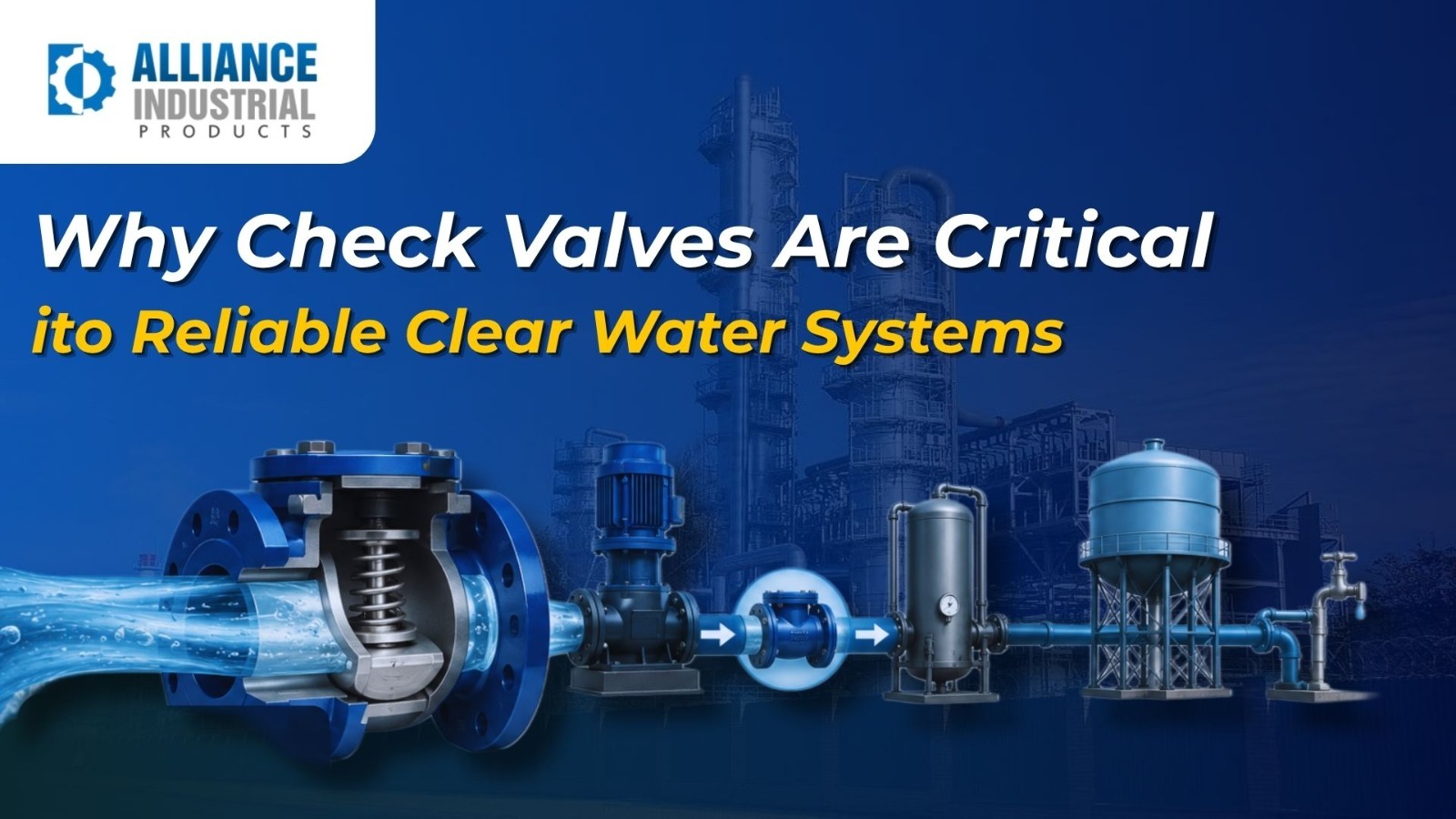
Reliable water distribution depends on more than pumps and pipelines. It also depends on controlling the direction of flow.
This is where Non-Return Valve Clear Water Applications play a significant role. These valves allow water to move in one direction while preventing unwanted reverse flow. As a result, they help protect pumps, pipelines, filtration equipment, and water supply infrastructure from operational disruptions and potential damage.
From municipal water networks to industrial utilities, check valves remain one of the simplest yet most important components in modern water systems.
Understanding the Function of a Check Valve
A check valve, also known as a non-return valve (NRV), is an automatic valve that opens when fluid moves in the intended direction and closes when flow attempts to reverse.
Unlike manually operated valves, check valves rely on pressure differentials created by the flow itself. This allows them to operate without external power, actuators, or control systems.
According to the American Water Works Association (AWWA), check valves are commonly used in water transmission and distribution systems to prevent backflow and protect pumping equipment. American Water Works Association (AWWA) Standards Program
Why Reverse Flow Creates Problems
In any water distribution network, reverse flow can occur when:
- Pumps stop suddenly
- System pressure changes
- Storage tanks discharge unexpectedly
- Equipment failures occur
- Maintenance activities alter system conditions
When water flows backward, it can create several operational risks.
These include:
- Pump damage
- Pipeline pressure disturbances
- Water contamination risks
- Loss of system efficiency
- Increased maintenance requirements
A properly selected Reverse Flow Prevention Valve helps eliminate these risks by maintaining one-way flow throughout the system.
Non Return Valve Clear Water Applications in Modern Infrastructure
Clear water systems differ significantly from slurry, wastewater, or process fluid systems.
Since clear water contains little to no abrasive solids, valve design priorities shift toward:
- Leak-tight sealing
- Minimal pressure loss
- Reliable closing performance
- Long service life
- Smooth flow characteristics
This makes check valves particularly effective in a wide range of clear water applications.
Water Supply Lines
Municipal and industrial water supply networks rely on check valves to maintain water quality and system integrity.
In potable water systems, backflow prevention is a critical requirement because reverse flow can introduce contaminants into clean water supplies.
The World Health Organization (WHO) identifies backflow prevention as an important element of protecting drinking water distribution systems. WHO Drinking Water Quality Resources
In these applications, a Check Valve for Water Systems helps maintain safe and reliable water delivery.
Borewells and Submersible Pumps
Submersible pumping systems frequently use non-return valves on discharge lines.
When a pump shuts down, gravity can cause water inside the riser pipe to flow backward.
This can result in:
- Loss of prime
- Increased startup loads
- Additional pump wear
- Water column separation
By retaining water inside the discharge line, a properly selected Pump Protection Valve helps support smoother restart conditions and reduces mechanical stress on pumping equipment.
Filtration Systems
Modern filtration systems depend on maintaining controlled flow paths.
Applications include:
- Reverse osmosis systems
- UV treatment systems
- Carbon filtration units
- Water treatment facilities
Check valves prevent treated water from flowing backward through filtration equipment.
This helps preserve filtration performance and prevents unwanted contamination within the treatment process.
Boiler Feed Water Systems
Boiler systems often operate at elevated temperatures and pressures.
Without proper backflow protection, hot water could migrate into lower-pressure sections of the system.
Check valves help isolate critical equipment and maintain intended flow direction between feedwater and boiler circuits.
Supporting Reliable Clear Water Distribution Systems
Large Clear Water Distribution Systems often include multiple pumping stations, reservoirs, storage tanks, and pressure zones.
A single reverse flow event can affect the stability of the entire network.
Check valves support system reliability by:
- Maintaining directional flow
- Protecting pumps and motors
- Reducing hydraulic disturbances
- Improving operational continuity
- Supporting water quality objectives
Their role becomes even more important as distribution networks expand and become more interconnected.
Key Performance Considerations When Selecting Check Valves
Selecting the correct valve goes beyond matching pipe size.
Engineers typically evaluate several factors:
Pressure Loss
Every valve creates some resistance to flow.
For clear water systems, minimizing head loss improves overall pumping efficiency and reduces energy consumption.
Closing Characteristics
Rapid closure can help prevent reverse flow.
However, excessive closing speed may contribute to pressure surges.
The ideal valve design balances both requirements.
Water Hammer Resistance
Water hammer occurs when sudden flow changes generate pressure waves within a pipeline.
The U.S. Bureau of Reclamation identifies water hammer as a significant hydraulic phenomenon that can damage piping systems, valves, and equipment if not properly controlled. U.S. Bureau of Reclamation Hydraulic Transients Resources
Modern check valve designs help reduce the likelihood and severity of these transient events.
Installation Location
Valve placement influences performance.
Check valves are commonly installed:
- Downstream of pumps
- Near booster stations
- At filtration equipment
- On storage tank connections
- Within treatment plant piping networks
Correct positioning helps maximize protection and reliability.
Common Check Valve Types for Clear Water Applications
Several valve designs are widely used in water infrastructure.
Swing Check Valves
A hinged disc swings open during forward flow and closes when flow reverses.
These valves are common in large-diameter water pipelines.
Silent Check Valves
Spring-assisted closure helps reduce water hammer and hydraulic shock.
These valves are frequently selected for pumping systems.
Dual Plate Check Valves
Two spring-loaded plates provide compact construction and low-pressure loss.
They are often used where installation space is limited.
Each design offers different advantages depending on operating conditions and system requirements.
Looking for Reliable Check Valve Solutions?
In modern Non Return Valve Clear Water Applications, even a simple component can have a major impact on system performance. The right check valve helps maintain flow direction, protect pumps, reduce maintenance requirements, and improve overall reliability across water distribution networks.
At Alliance Industrial Products, we supply high-quality industrial valve solutions backed by technical expertise, responsive support, and dependable product availability.
Contact us today to discuss your clear water system requirements and find the right valve for long-term performance.

